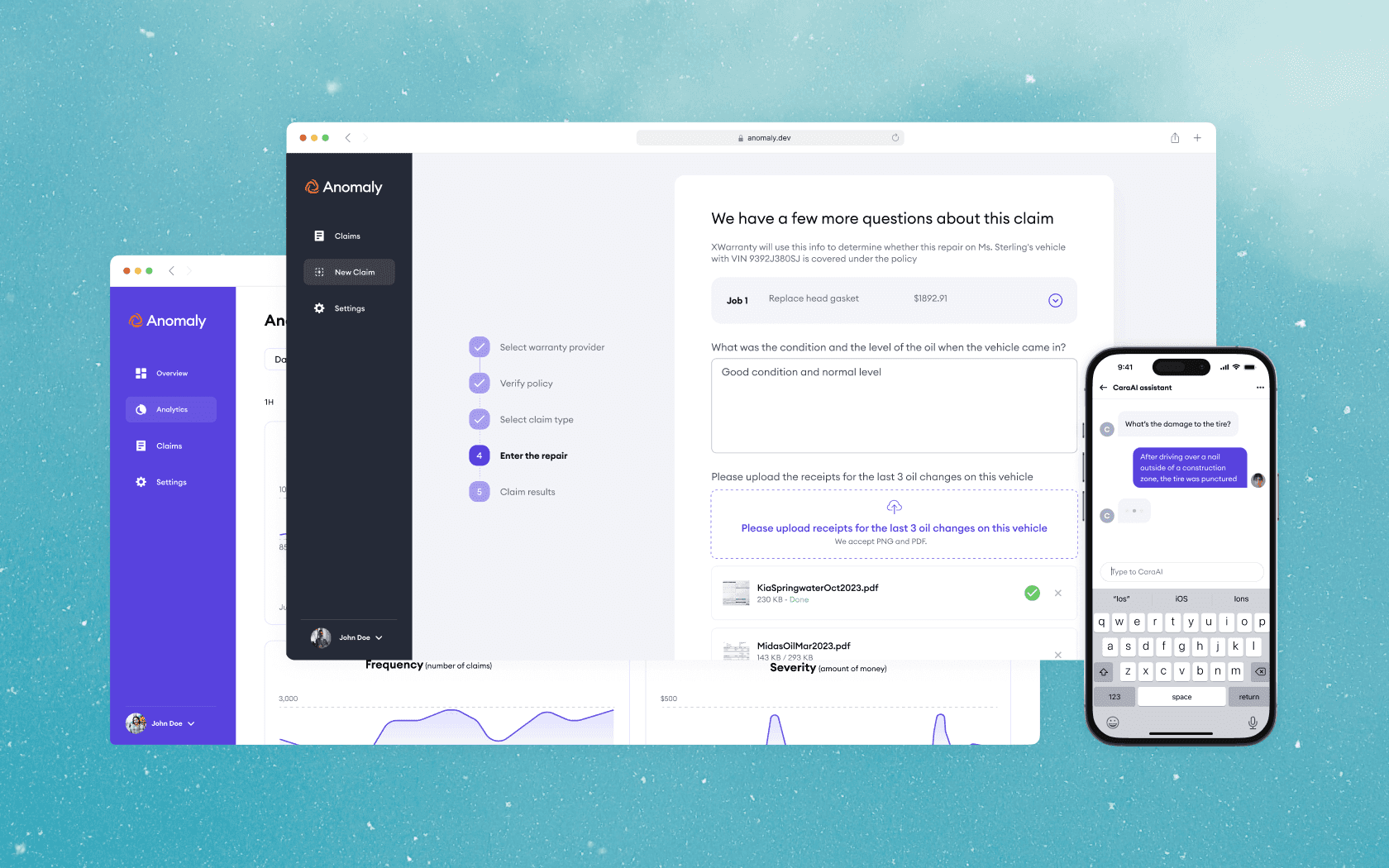
Expediting warranty claims with the power of LLMs

Anomaly
Timeline
2 months
Team
CEO, 3 engineers, 1 PM, sales
A pivot
Anomaly initially raised capital to build web3 tools but discovered the business was not venture-scale. The founder brought me on to explore new opportunities and design the next MVP.
Process
Learning from service advisors
Although the founder had strong relationships with TPAs (companies that manage warranties), the team lacked insight into how service centers handle claims.
I used guerilla research to bridge this gap—scanning r/serviceadvisors to learn the language and standards of the space, then posting to schedule conversations with six service advisors. Interest was so high that I had to remove the scheduling link the next morning, having already secured more participants than needed.

Quotes from service advisors
It takes up about an hour or two of your time any time a customer calls in with one.
CarShield ****ed me today. Good times. Sending all their own parts and knocked down all of my pro demand labor times. That's after it took a week for them to respond to me.
I’m at 42 days for an engine approval from Carshield after taking all the pictures and videos they request.
From prototyping to product direction
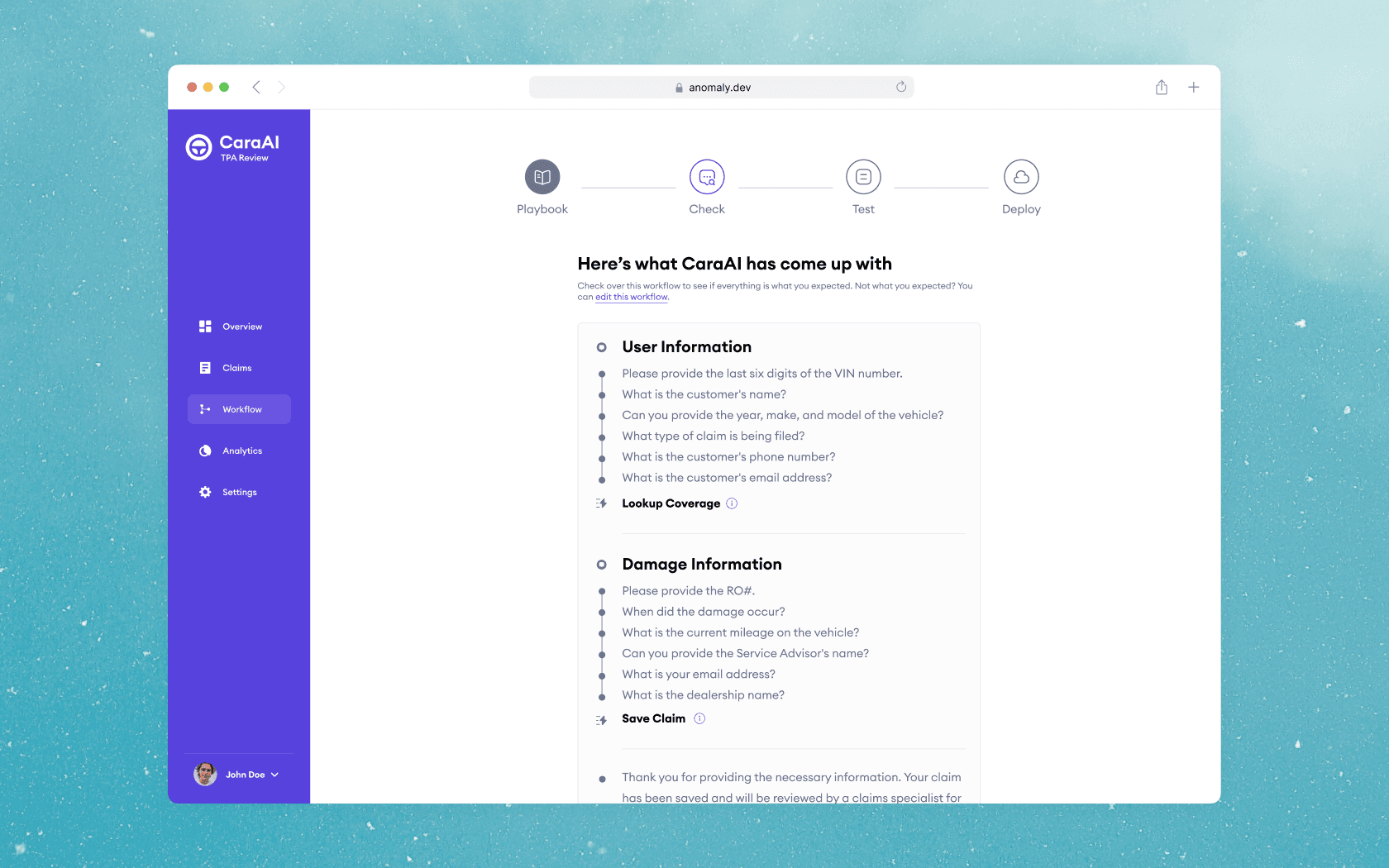
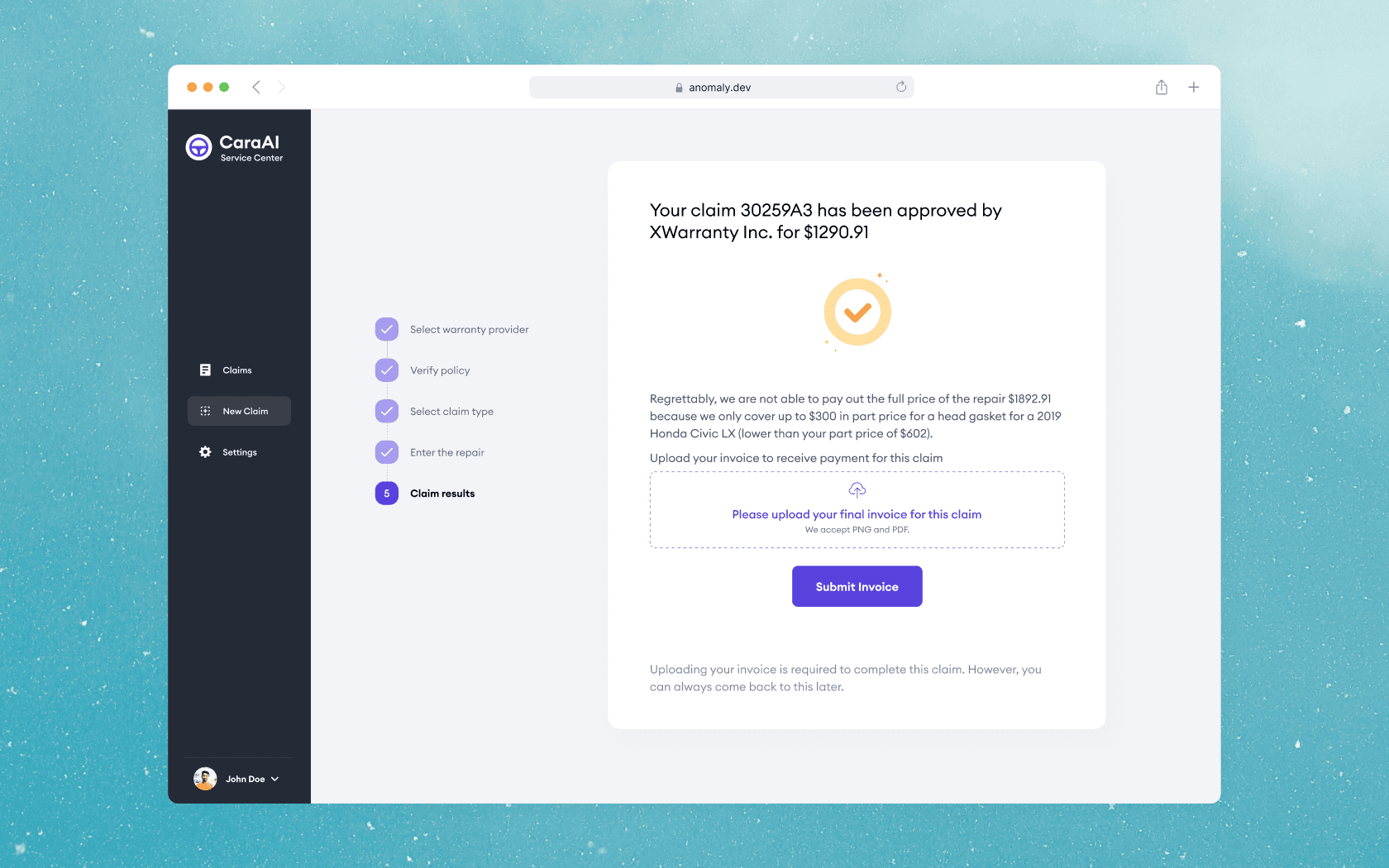
Anomaly didn’t need engineering-ready tickets—it needed a clear product vision and materials that could be presented to TPAs during sales calls. These designs helped the team close its early deals.


Result
Centering on the problem, not the tech
Although the client’s main request was mockups, my work with Anomaly added value by introducing research that helped the team refocus on the right problem space and build the capability to regularly co-design with users. As the team onboards TPAs, the next step is to run this discovery and design process with call center agents at third-party warranty providers to understand their pain points and explore how software can improve their work.